Rush Royale Tier List - Best Units For Update 35.0 [2026]
Rush Royale tier list for Update 35.0 that ranks the best units, explains deck fit, and shows which upgrades are worth your rare resources right now.
Mar 16, 2026116K Shares1.9M Views
Rush Royale Tier List - Best Units, Deck Fit, And Upgrade Priorities
If most Rush Royale tier listsfeel stale the moment you land on them, that is not your imagination. A lot of pages still rank units like isolated cards, while the current game rewards full shells: carry, support, hero, spell, artifacts, and mode fit. Rush Royale officially supports both PvPand Co-Op, so a useful tier list has to think beyond raw damage.
The goal here is simple: help you answer what to build, what to upgrade, and what to leave alone.
Quick Answer
- Wukong, Bard, Genie, and Dryadare my strongest all-purpose priorities right now.
- A-tier units are still excellent upgradeswhen they fit your shell better than a trendy S-tier option.
- Beginners should avoid copying endgame decksthat assume maxed support and advanced systems.
- Update 34.0 changed how tier lists should be readbecause full-build context matters more now.
- PvP and Co-Op should not be treated as the same ranking problem.
| Player type | Best priority |
| New player | Build one clean deck before chasing flashy legendaries |
| Returning player | Re-evaluate old favorites through Legendarity and support systems |
| Midgame account | Prioritize flexible carries and evergreen supports |
| High-investment account | Push the units with the best scaling and deck flexibility |
What Changed In Rush Royale After Updates 33.0, 34.0, And 35.0
This section matters because the rankings below are only useful if you understand the patch context behind them. The biggest reason older lists fail is that they still rank cards as isolated units instead of ranking them inside full deck ecosystems.
Officially, update 33.0 added Lucia and reincarnations for Monk and Demon Hunter. Update 34.0 added Legendarity, spells, artifacts, perks, and Valkyrie. Rush Royale update 35.0added Multifaction, the Supremacy Tournament, and Wukong. Data as of 2026; check the latest official notes.
Why Older Tier Lists Can Mislead You Now
A lot of older lists still answer the wrong question. They ask, “Which unit has the highest ceiling?” when most players actually need to know, “Which unit helps my account win more consistently right now?”
That difference matters more after Legendarity because one carry can look broken in a complete shell and merely average in a half-built roster. The same unit can be overrated or underrated depending on support, hero, spell, artifacts, and mode.
Current Rush Royale is a deck-context game, not a pure card-isolation game.
How Legendarity, Spells, Artifacts, Perks, And Multifaction Affect Rankings
Officially, update 34.0says Legendarity unlocks 1 spelland up to 3 artifactsper deck, while perks replaced items as account-wide effects. That single system change makes older flat rankings much less reliable.
Update 35.0 then added Multifaction and Wukong, which pushes experimentation and makes newer units easier to slot into more deck structures.
The best unit now is usually the one that stays strong inside a complete shell, not the one with the prettiest standalone headline.
How This Rush Royale Tier List Was Built
You should know the ranking logic before you use the rankings. That makes the article useful even if your collection does not match an endgame account.
Ranking Criteria: Carry Power, Flexibility, Support Value, Talent Dependence, Beginner Accessibility
I am weighing each unit against five questions:
- Can it anchor a real deck?
- Does it stay useful outside one narrow combo?
- How support-dependent is it?
- How punishing is it for beginners or midgame accounts?
- Is it still a smart upgrade three patches from now?
Units rise when they are strong andefficient. They fall when they are only strong in ideal conditions.
Why Units, Heroes, And Decks Are Ranked Separately
Rush Royale’s official game pagetreats units, heroes, PvP, and Co-Op as separate parts of the strategic loop, and that is the cleanest way to rank them too.
A unit tier list should answer what to invest in. A hero and systems section should answer how to strengthen the shell you already chose. Keeping those separate makes the next sections much easier to use.
Full Tier Snapshot
This table is here for speed. The detailed breakdowns below focus on the units that matter most for current upgrade decisions.
| Tier | Units |
| S | Wukong, Bard, Genie, Dryad, Spirit Master, Enchanted Sword |
| A | Valkyrie, Demon Hunter, Monk, Harlequin, Summoner, Witch, Gunslinger, Trapper |
| B | Bruiser, Cultist, Scrapper, Sea Dog, Inquisitor, Tesla, Minotaur, Knight Statue |
| C | Banshee, Robot, Blade Dancer, Riding Hood |
| D | Engineer, Boreas, Hex, Clock of Power, Stasis, Demonologist |
Detailed breakdowns below focus on the units that matter most for current upgrade decisions, while this expanded snapshot includes additional situational or lower-priority cards for completeness.
S Tier
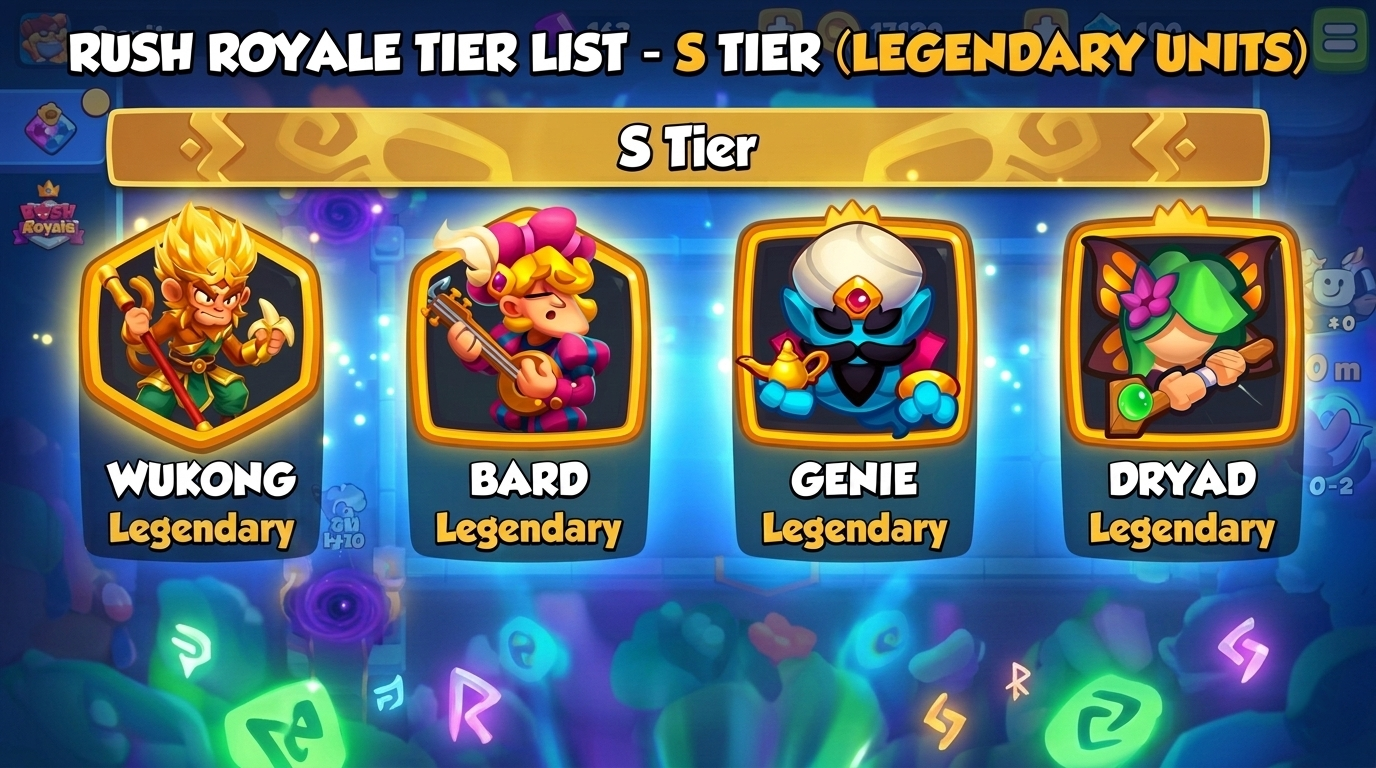
These are the units I trust most when I think about current meta value, upgrade efficiency, and long-term usefulness. They are not perfect in every account, but they are the closest thing to premium priorities.
Wukong
- Why it’s in the tier:Wukong belongs in S tier because update 35.0 introduced him as a new legendary built around clones, scaling, and a high-upside talent path. New headline units do not automatically deserve S tier, but Wukong has the flexibility and ceiling that justify it. Data as of 2026; check the latest official notes.
- Best role:Main carry with premium scaling.
- Who should upgrade it:High-investment accounts first, then midgame players who already own stable support.
- Best deck partners:Dryad, Harlequin, Scrapper, and strong hero/spell support that stabilizes the board.
- Main weakness:Too support-hungry to be the safest first legendary for a thin roster.
Bard
- Why it’s in the tier:Bard stays in S tier because it combines real carry pressure with safer long-term value than many hype-driven alternatives. It is one of the cleanest “this still helps your account later” upgrades.
- Best role:Main carry.
- Who should upgrade it:Midgame and advanced players who want one of the safer premium carry paths.
- Best deck partners:Dryad, Harlequin, Summoner-style tempo support, and consistency tools.
- Main weakness:Less forgiving when the shell is incomplete than the reputation suggests.
Genie
- Why it’s in the tier:Genie earns S tier because it remains dangerous without demanding absolute perfection. I value that reliability highly in a meta where a lot of flashy units need too many conditions.
- Best role:Main carry with consistent ladder value.
- Who should upgrade it:Returning players, midgame accounts, and advanced players who want a dependable carry.
- Best deck partners:Dryad, Harlequin, Scrapper, and support pieces that smooth merge flow.
- Main weakness:Strong, but not always the highest ceiling if you already own a more specialized premium shell.
Dryad
- Why it’s in the tier:Dryad is S tier because support value is account value. A carry can be amazing in one deck; Dryad can make several strong decks better.
- Best role:Premium support and board development tool.
- Who should upgrade it:Almost everyone with multiple carry options.
- Best deck partners:Wukong, Bard, Genie, Demon Hunter, Monk, and many future carries.
- Main weakness:It improves decks rather than defining them, so some players underrate it and delay the upgrade too long.
S tier gives you the strongest broad priorities, but A tier is where many players will find their most realistic next upgrade.
A Tier
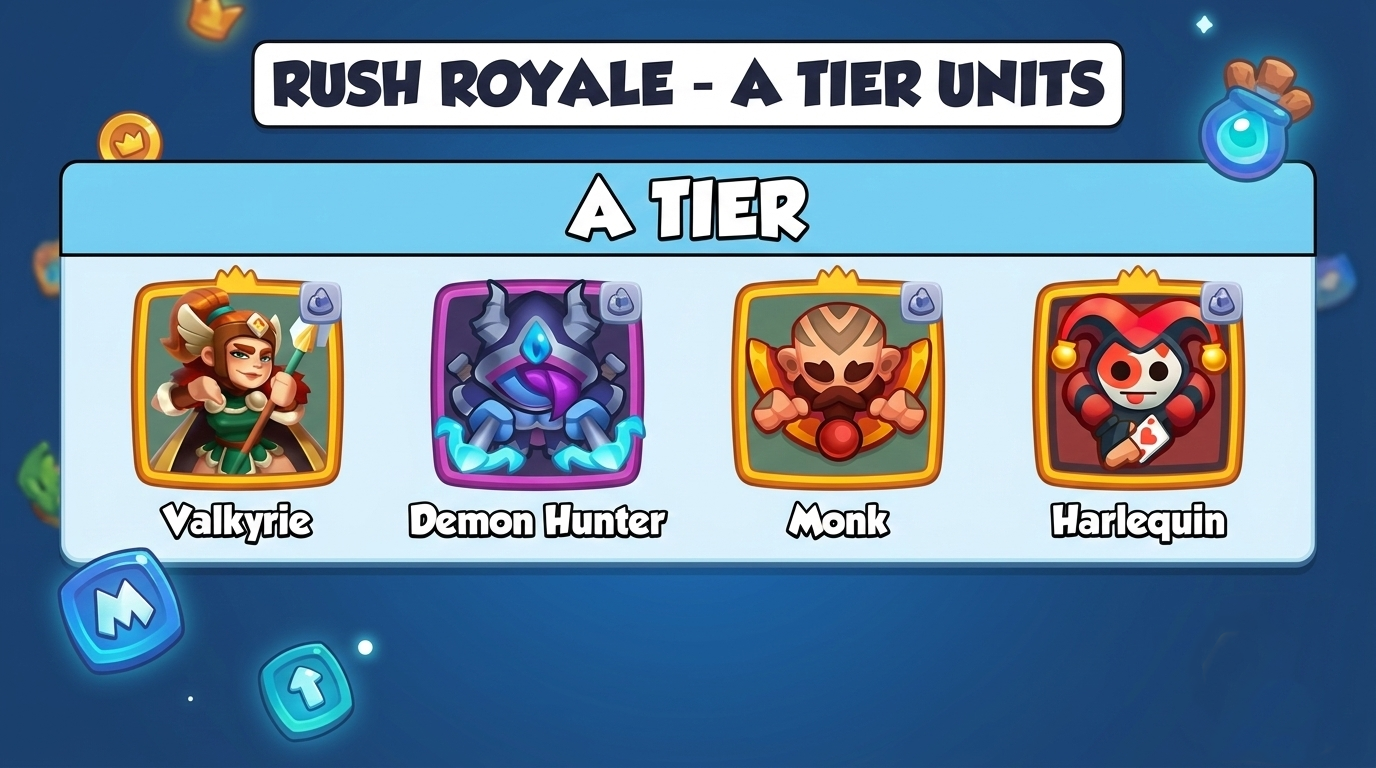
A-tier units are still excellent. They simply ask for a little more support, a little more account context, or a little more caution than the S-tier group.
Valkyrie
- Why it’s in the tier:Valkyrie entered the game with update 34.0 and clearly has serious upside, but I prefer A tier over S until a newer unit settles more fully into the wider meta. Data as of 2026; check the latest official notes.
- Best role:Main carry with high upside.
- Who should upgrade it:Players who like committing to newer premium archetypes and can support them properly.
- Best deck partners:Dryad, Harlequin, rank-growth support, and heroes that reward stable board development.
- Main weakness:More patch-sensitive and shell-sensitive than the safest S-tier carries.
Demon Hunter
- Why it’s in the tier:Demon Hunter stays in A tier because update 33.0 still treated it as important enough to receive reincarnation support. It remains a real deck anchor, just not the safest universal recommendation anymore. Data as of 2026; check the latest official notes.
- Best role:Main carry in a committed build.
- Who should upgrade it:Returning players and midgame accounts whose support shell is already close.
- Best deck partners:Dryad, Harlequin, Enchanted Sword-style synergy, and rank-scaling support.
- Main weakness:Too shell-dependent to be a blind “upgrade first” answer.
Monk
- Why it’s in the tier:Monk remains dangerous and update 33.0 reinforced that by giving it reincarnation attention. It still wins plenty of games, but it is more demanding than the most forgiving top-tier options. Data as of 2026; check the latest official notes.
- Best role:Main carry in a structured setup-heavy deck.
- Who should upgrade it:Players who already enjoy Monk lines and have the patience to build around it.
- Best deck partners:Dryad, Harlequin, rank management support, and heroes that reward controlled board states.
- Main weakness:The payoff is real, but the setup burden is higher than many players remember.
Harlequin
- Why it’s in the tier:Harlequin belongs in A tier because consistency is power. It increases flexibility and smooths out awkward openings, which matters in more decks than most damage cards ever will.
- Best role:Premium utility and tempo support.
- Who should upgrade it:Midgame and advanced players with several viable carries.
- Best deck partners:Wukong, Bard, Genie, Demon Hunter, Monk, and most merge-sensitive shells.
- Main weakness:Amazing support does not always feel flashy, so players sometimes misjudge the value per resource spent.
A tier is full of units worth respecting, while B tier is where “good” starts needing more explanation.
B Tier
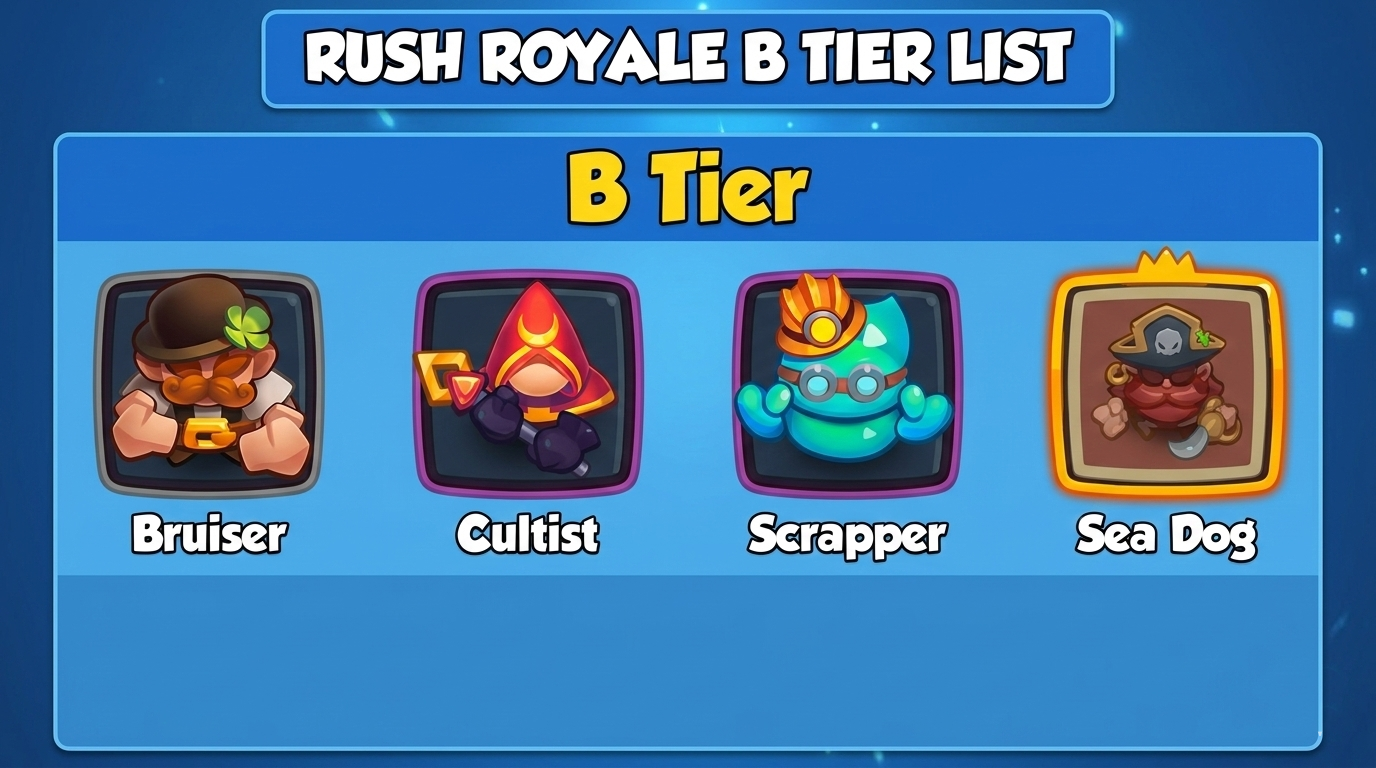
B tier is not weak. These are still playable, useful, and sometimes very effective units. I simply would not recommend them as broad first priorities for most accounts.
Bruiser
- Why it’s in the tier:Bruiser is one of the better B-tier cards because it can outperform its letter grade in practical midgame play. It is straightforward, forgiving, and easier to use than some fancier alternatives.
- Best role:Bridge carry for stable progression.
- Who should upgrade it:Beginners and midgame players who need a dependable damage option now.
- Best deck partners:Dryad, Harlequin, mana support, and control tools that reduce boss pressure.
- Main weakness:Usually gets outclassed later by carries with stronger scaling.
Cultist
- Why it’s in the tier:Cultist stays in B tier because it still offers a clear win condition, but the resource efficiency no longer feels premium enough for a broad recommendation.
- Best role:Main carry in a dedicated archetype.
- Who should upgrade it:Players who already like the archetype and have enough support to finish the shell.
- Best deck partners:Dryad, Harlequin, structure-dependent support, and heroes that reward controlled setup.
- Main weakness:Too narrow compared with safer long-term investments.
Scrapper
- Why it’s in the tier:Scrapper is one of those cards that often looks average until a good deck is missing it. It is useful, but usually not the first upgrade that changes your whole account.
- Best role:Support and board management tool.
- Who should upgrade it:Players with established carry decks that need smoother scaling.
- Best deck partners:Wukong, Genie, Bruiser, and other shells that value controlled rank growth.
- Main weakness:Strong support value, but lower standalone impact than premium carries or Dryad-level support.
Sea Dog
- Why it’s in the tier:Sea Dog stays playable and can still punish unprepared opponents, but I think its brand recognition often runs ahead of its actual account priority.
- Best role:Carry with matchup and shell dependence.
- Who should upgrade it:Players already invested in Sea Dog lines, not accounts choosing a first premium direction.
- Best deck partners:Dryad, Harlequin, utility support, and tempo-friendly heroes.
- Main weakness:Strong enough to matter, not stable enough to prioritize broadly.
B tier has useful cards, but C tier is where comfort picks start overtaking efficient upgrades.
C Tier
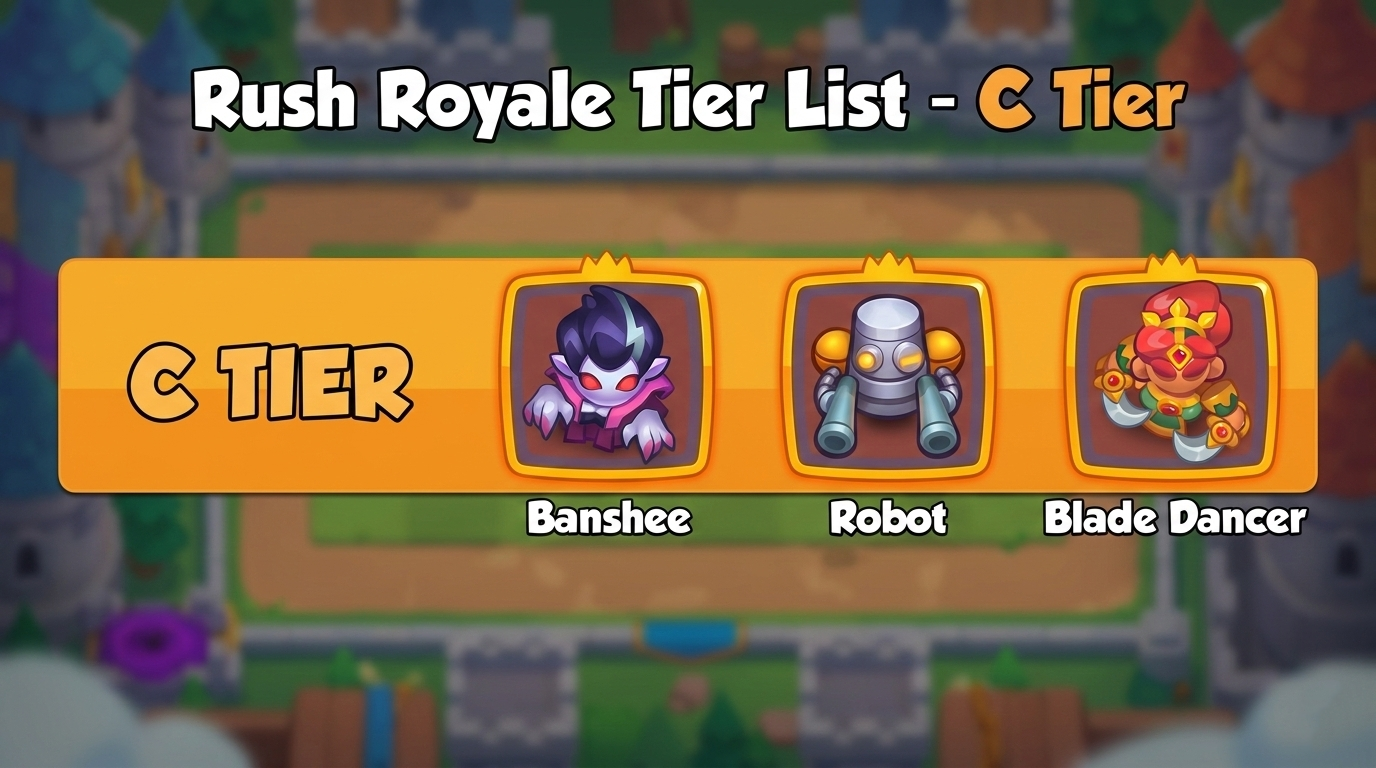
C-tier units can absolutely win. The issue is not “never playable.” The issue is that most players get more value from spending the same resources somewhere else.
Banshee
- Why it’s in the tier:Banshee lands in C tier because it is one of those units that can look clever and functional in the right shell, but the average account gets more reliable value elsewhere.
- Best role:Niche carry or experimental ladder option.
- Who should upgrade it:Players who already understand the archetype and want to specialize.
- Best deck partners:Dryad, Harlequin, setup support, and shells that can protect a slower payoff.
- Main weakness:Too account-specific for a general recommendation.
Robot
- Why it’s in the tier:Robot stays above D because it can still steal games, especially against players who are uncomfortable into its pacing. That said, surprise value is not the same thing as stable upgrade value.
- Best role:Tempo-based niche carry.
- Who should upgrade it:Experienced players who already know the deck patterns well.
- Best deck partners:Merge support, mana tools, and consistency pieces that prevent dead openings.
- Main weakness:Too inconsistent for most readers to treat as a smart default investment.
Blade Dancer
- Why it’s in the tier:Blade Dancer is still iconic, but iconic is not the same as efficient. Too many players over-invest here because they remember how threatening it felt in older metas.
- Best role:Archetype-specific carry.
- Who should upgrade it:Existing Blade Dancer players, not neutral accounts choosing the best current path.
- Best deck partners:Dryad, Harlequin, positional/setup support, and heroes that reward stable formation play.
- Main weakness:The payoff no longer justifies the resource cost as cleanly as stronger alternatives.
C tier marks the point where nostalgia and familiarity can easily cost you progress.
D Tier
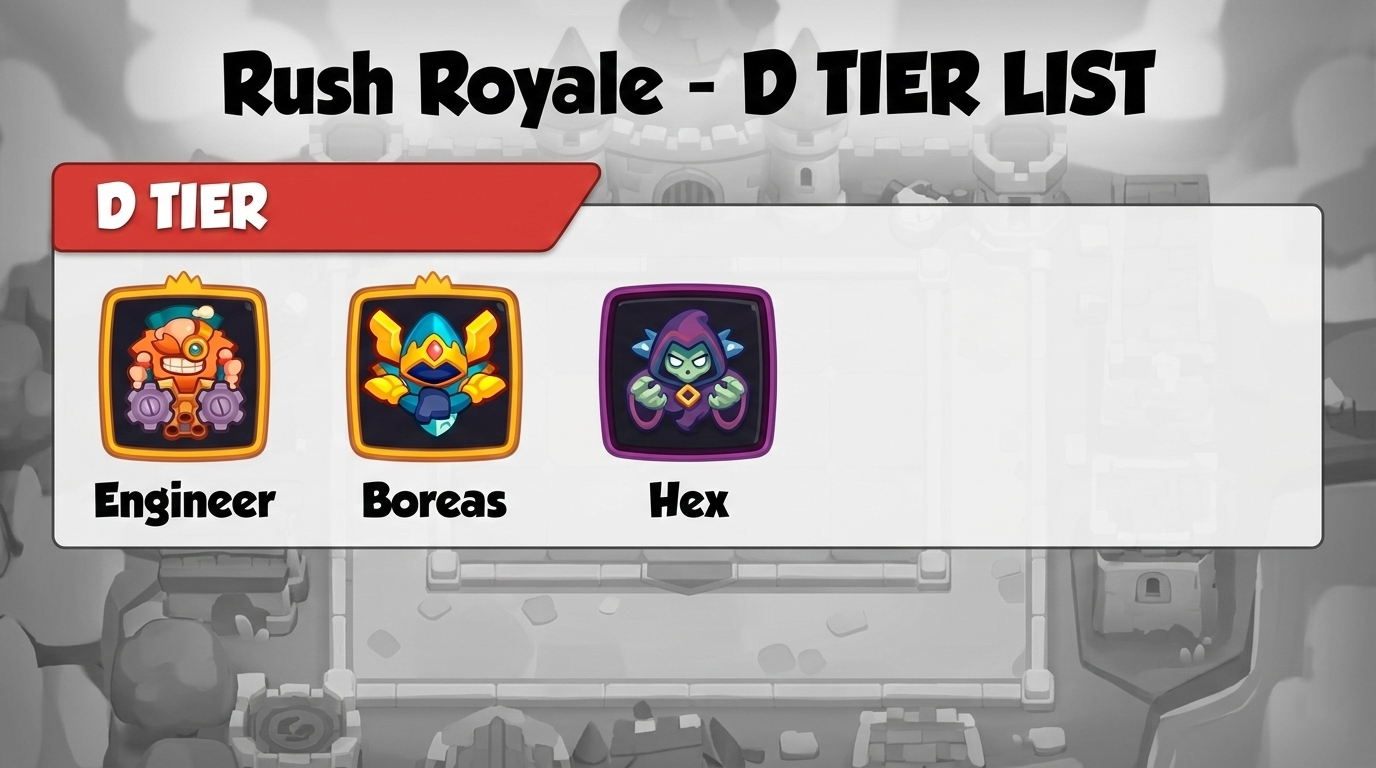
D tier is where I would actively warn most players away from spending resources. These cards are not forbidden, but they are poor default recommendations in the current environment.
Engineer
- Why it’s in the tier:Engineer gets a fun spotlight in update 35.0 through the Supremacy Tournament combat perk, but tournament novelty is not the same as broad ladder priority. Data as of 2026; check the latest official notes.
- Best role:Niche event or comfort pick.
- Who should upgrade it:Only players who already enjoy Engineer-based play and accept the tradeoff.
- Best deck partners:Setup support, rank tools, and shells that can protect it long enough to matter.
- Main weakness:Too low-priority for efficient account growth.
Boreas
- Why it’s in the tier:Boreas remains easy to understand, but that simplicity is no longer enough to justify upgrading it ahead of stronger modern options.
- Best role:Early bridge damage card.
- Who should upgrade it:Only players with very limited alternatives.
- Best deck partners:Slow/control tools, utility support, and safe early-game fillers.
- Main weakness:Falls off too hard relative to better carry investments.
Hex
- Why it’s in the tier:Hex is the type of unit that tempts players because it sounds clever. In practice, it usually asks for more commitment than the return deserves.
- Best role:Utility gimmick in a specialized shell.
- Who should upgrade it:Almost nobody as a priority.
- Best deck partners:Very specific control or proc-focused shells.
- Main weakness:Too narrow and too inconsistent to justify broad investment.
The takeaway is simple: if your account growth matters more than novelty, D-tier upgrades should wait.
Best Rush Royale Decks By Player Type
A tier list only becomes useful once it turns into an actual deck decision. This section is here to stop you from copying a flashy list that your account cannot support.
Best Beginner Deck
The best beginner deck is one with one clear carry, one boss-control tool, one board stabilizer, one mana helper, and one flexible slot.
Example shell
- Main carry: your most reliable early damage unit
- Boss control: one safe control slot
- Stability: one board-smoothing support
- Mana help: one economy tool
- Flex: one utility answer you already use well
If Bruiser is your best accessible carry, a clean Bruiser shell is usually smarter than a broken legendary shell.
Best No-legendary Or Low-investment Deck
A good low-investment deck should do three things well:
- Hold the board early
- Survive boss pressure
- Give you simple merge decisions
Example shell
- One reliable damage unit
- One control card
- One mana card
- One merge filler
- One utility slot
You are not trying to imitate top ladder here. You are trying to build something repeatable.
Best Midgame Ladder Deck
Midgame accounts usually benefit most from one proven carry, two consistency tools, one growth piece, and one flex answer.
Example shell
- Demon Hunter or Monk
- Dryad
- Harlequin
- One growth/scaling support
- One flex answer for your weakest matchup
This is also the stage where support upgrades become smarter than chasing every new headline carry.
Best Late-game PvP Deck
Rush Royale officially positions PvP as a core game mode, so strong late-game decks should assume better opponents and tighter punish windows.
Example shell
- Wukong, Bard, or Genie
- Dryad
- Harlequin
- Scrapper or another scaling support
- One flex slot based on your preferred hero and spell setup
That is the point where premium carries start justifying their reputation.
Best Co-Op Deck
Rush Royale also officially supports Co-Op as a distinct mode, so your best Co-Op deck should not automatically be your best PvP deck.
Example shell
- One safe scaling carry
- One boss-control option
- One sustain or consistency support
- One growth tool
- One team-value flex slot
Co-Op usually rewards steadier scaling and cleaner boss handling more than tempo races do.
The best deck is always the one that fits both your mode and your collection.
Best Heroes, Spells, And Artifacts To Pair With Top Units
Modern Rush Royale asks you to think about more than units. This section matters because update 34.0 made spells and artifacts part of each deck through Legendarity.
Hero Shortlist
Update 33.0 introduced Luciaas a new legendary hero and also updated Necromancer, which tells you hero choice remains an important live-system layer.
My practical rule is simple:
- Pair fragile carries with heroes that stabilize tempo
- Pair already-stable carries with heroes that increase pressure
- Use heroes that make your main win condition easier, not just flashier
Spell Shortlist
Update 34.0 officially gives each deck one spell slotthrough Legendarity.
Use that slot to solve a real problem:
- Fragile carry:take a spell that helps you recover bad boards
- Scaling carry:take a spell that helps you survive long enough to scale
- Tempo deck:take a spell that helps you convert an early lead
- Co-Op build:take a spell that improves safety and boss control
Artifact Shortlist
Update 34.0 also allows up to three artifacts per deck.
| Situation | Best artifact priority |
| Beginner account | Consistency and board stability |
| Midgame account | Scaling and repeatable value |
| Advanced PvP account | Damage amplification for your main shell |
| Co-Op focus | Survival and long-run reliability |
The rule I trust most: pick artifacts that improve your main win condition every game, not artifacts that only feel good in rare situations.
Which Legendary Should You Upgrade First?
This is the decision most players actually care about. The answer is rarely “the flashiest one.” It is usually “the one that helps the most decks or the one your account can support today.”
Safe Long-term Investments
| If your account looks like this | Upgrade this next |
| You already own strong supports | Wukong, Bard, or Genie |
| You own multiple viable carries | Dryad or Harlequin |
| You are returning after a break | One proven A-tier carry, then support |
| Your roster is thin | The most flexible card that fits more than one shell |
The safest long-term investments are usually the units that stay useful across several patches and several deck structures.
High-ceiling Picks That Need More Support
Monk, Demon Hunter, and some newer premium archetypes can be excellent. The mistake is upgrading them before the shell is ready.
A slightly less glamorous card that works now is usually better than a famous card that sits half-built.
When To Wait Instead Of Spending Resources
Waiting is sometimes the highest-value move, especially after rapid official updates like 33.0, 34.0, and 35.0.
If you are still guessing at the shell, save the resources. If you already know the shell, then upgrade with confidence.
Also Check Out: Disventure Camp Tier List
Frequently Asked Questions
What Is The Best Unit In Rush Royale Right Now?
My safest current answer is Wukong, but only as an editorial meta read, not a permanent fact. The right choice still depends on your support, hero, and overall shell.
What Are The Meta Units In Rush Royale?
Right now, I trust Wukong, Bard, Genie, and Dryadthe most, with Valkyrie, Demon Hunter, Monk, and Harlequinclose behind.
What’s The Best Setup For Rush Royale?
The best setup is one carry, two consistency tools, one growth piece, and one flex slot. If your deck cannot recover from a bad board, fix that first.
Is Rush Royale Really PvP?
Yes. Rush Royale officially supports both PvPand Co-Opas core modes.
Does This Tier List Work For Co-Op Too?
Only partly. Some units stay strong in both modes, but Co-Op usually rewards safer scaling and steadier long-run value.
What’s The Best Rush Royale Deck For Beginners?
The best beginner deck is a low-investment shell with one obvious carry and easy decisions. Clean execution beats complicated theory.
Which Legendary Should I Upgrade First?
Usually the legendary that improves more than one viable deck, or the support piece that raises your whole roster’s floor. Dryad is often a strong example.
Why Do Tier Lists Disagree So Much?
Because modern Rush Royale depends heavily on shell context. Update 34.0 made that even more true by adding Legendarity, spells, artifacts, and perks.
What Changed In Rush Royale Update 35.0?
Officially, update 35.0 added Multifaction, the Supremacy Tournament, and the new legendary unit Wukong.
Why Does Update 34.0 Matter For Tier Lists?
Because update 34.0 added Legendarity, spells, artifacts, and perks, which made full-build context much more important than before.
Are Heroes Part Of A Rush Royale Tier List?
They matter a lot, but they are better covered separately because they change how a shell performs rather than replacing the shell itself.
Should Beginners Copy Endgame Decks?
No. Endgame decks often assume support depth, talents, and systems that beginners do not have yet.
How Often Does The Rush Royale Meta Change?
As often as meaningful updates land. The official news feed shows major updates in October 2025, December 2025, and February 2026 alone.
What If I Don’t Own S-tier Units?
Then use the list to find the best role-fit you do own. A clean A-tier or B-tier deck you can fully support is better than a broken S-tier dream.
Final Words
The best Rush Royale tier listis not the one with the loudest claims. It is the one that helps you make cleaner decisions.
Right now, that means treating Wukong, Bard, Genie, and Dryadas premium priorities, respecting Valkyrie, Demon Hunter, Monk, and Harlequinas strong but more conditional upgrades, and staying honest about which cards are nostalgia picks rather than efficient investments. The real edge is not chasing every rank label. It is understanding whyeach unit sits where it does.
Jump to
Rush Royale Tier List - Best Units, Deck Fit, And Upgrade Priorities
What Changed In Rush Royale After Updates 33.0, 34.0, And 35.0
How This Rush Royale Tier List Was Built
Full Tier Snapshot
S Tier
A Tier
B Tier
C Tier
D Tier
Best Rush Royale Decks By Player Type
Best Heroes, Spells, And Artifacts To Pair With Top Units
Which Legendary Should You Upgrade First?
Frequently Asked Questions
Final Words
Latest Articles
Popular Articles